IvorycomBook a demo

Blog

Writing about how revenue work actually gets done.

Category names move faster than the practices behind them. These pieces take one comparison at a time and work through what genuinely differs, what is marketing, and what it changes for a team on Monday morning.

Latest writing

  • Comparison

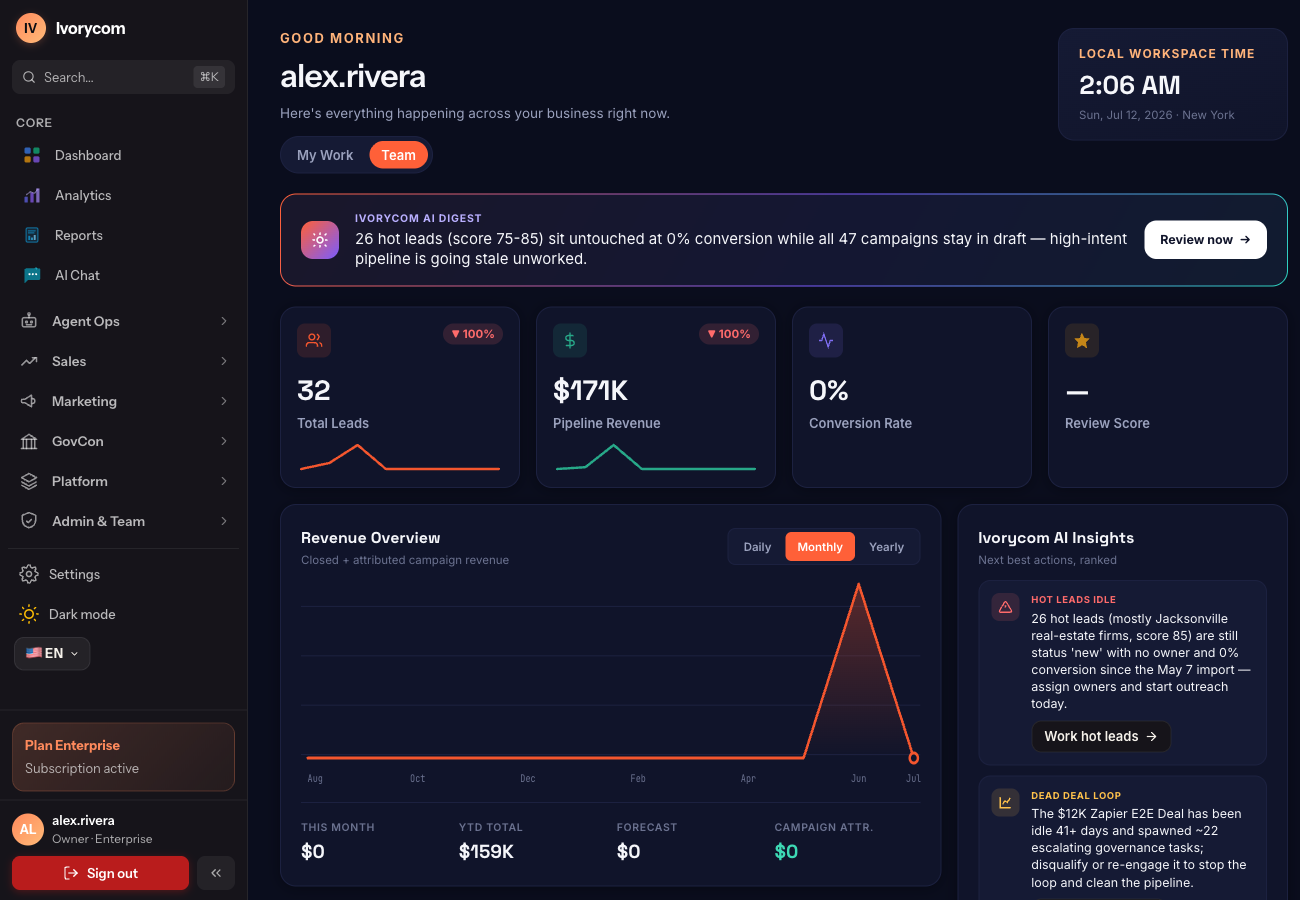
    Traditional CRM vs AI CRM: what actually changes

    Almost every CRM now claims AI. The claim is easy to make and hard to evaluate, because the interesting difference is not a feature list — it is which work the software will do when nobody is looking at it.

    6 min read

  • Definition

    What is an AI CRM?

    Every CRM vendor now has an AI page, which makes the category name almost useless as a filter. A definition is only worth having if it can be applied in a thirty-minute demo, so this one is built out of things you can watch happen.

    7 min read

  • Definition

    What is autonomous revenue?

    The phrase invites an unhelpful argument about whether software can sell. A more useful reading is narrower: autonomous revenue describes how much of the execution between a signal and an outcome happens without a person initiating it — which is a spectrum, and a measurable one.

    7 min read

  • Definition

    What is visitor intent?

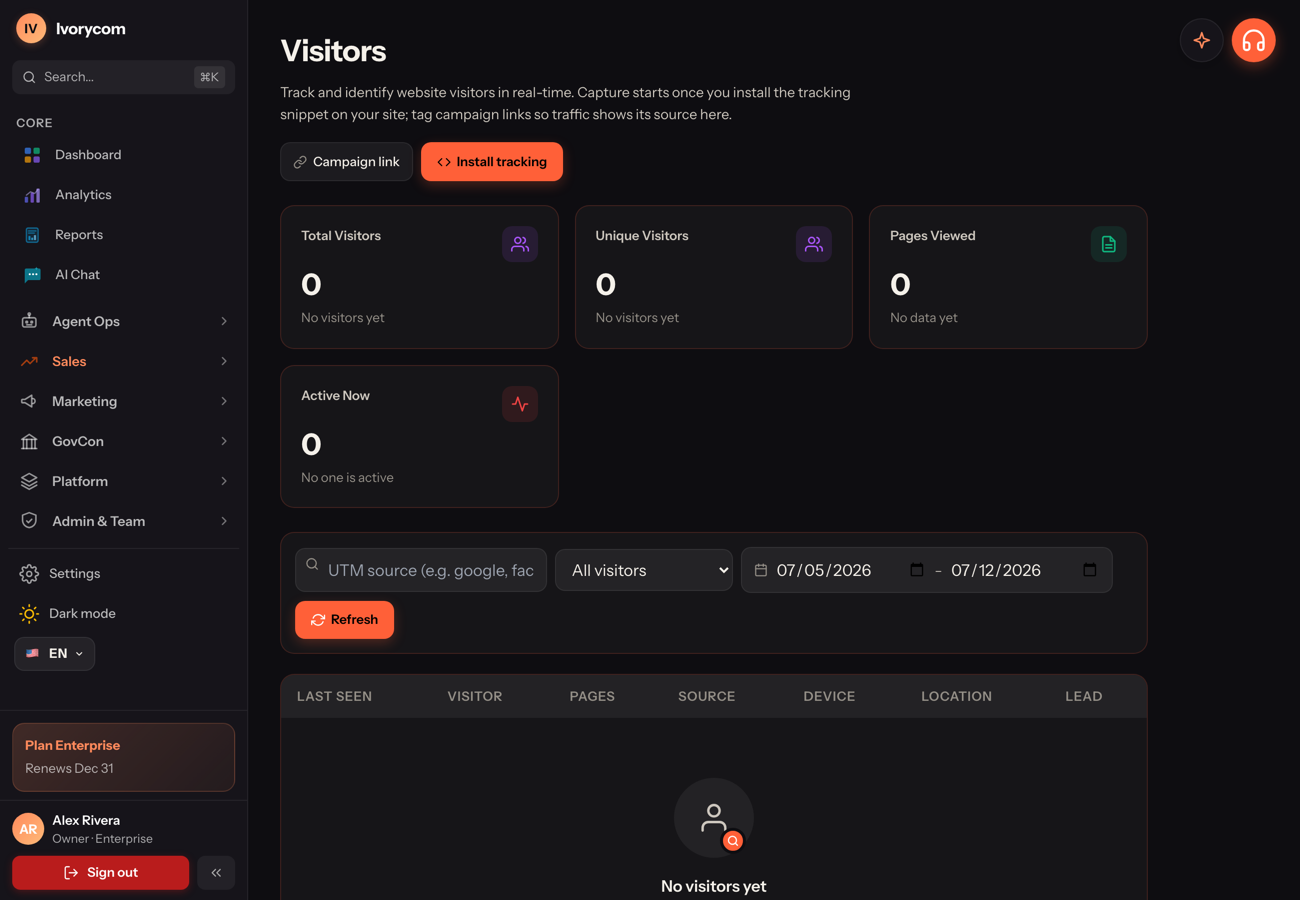
    Almost everyone who reaches a B2B website leaves without identifying themselves. Visitor intent is the practice of reading what those sessions imply — which is genuinely useful and routinely oversold, usually in the same sentence.

    7 min read

  • Comparison

    AI agents vs automation

    Both do work without a person. The difference is when the path was chosen — at design time by a human, or at run time by the system — and almost every practical consequence, including how each one fails, follows from that.

    7 min read

  • Framework

    What should a business AI agent be allowed to do?

    This gets debated as a philosophical question and decided as a configuration default, which is the worst of both. It is answerable, and the answer comes from sorting actions by consequence rather than by how impressive they are.

    8 min read

  • Definition

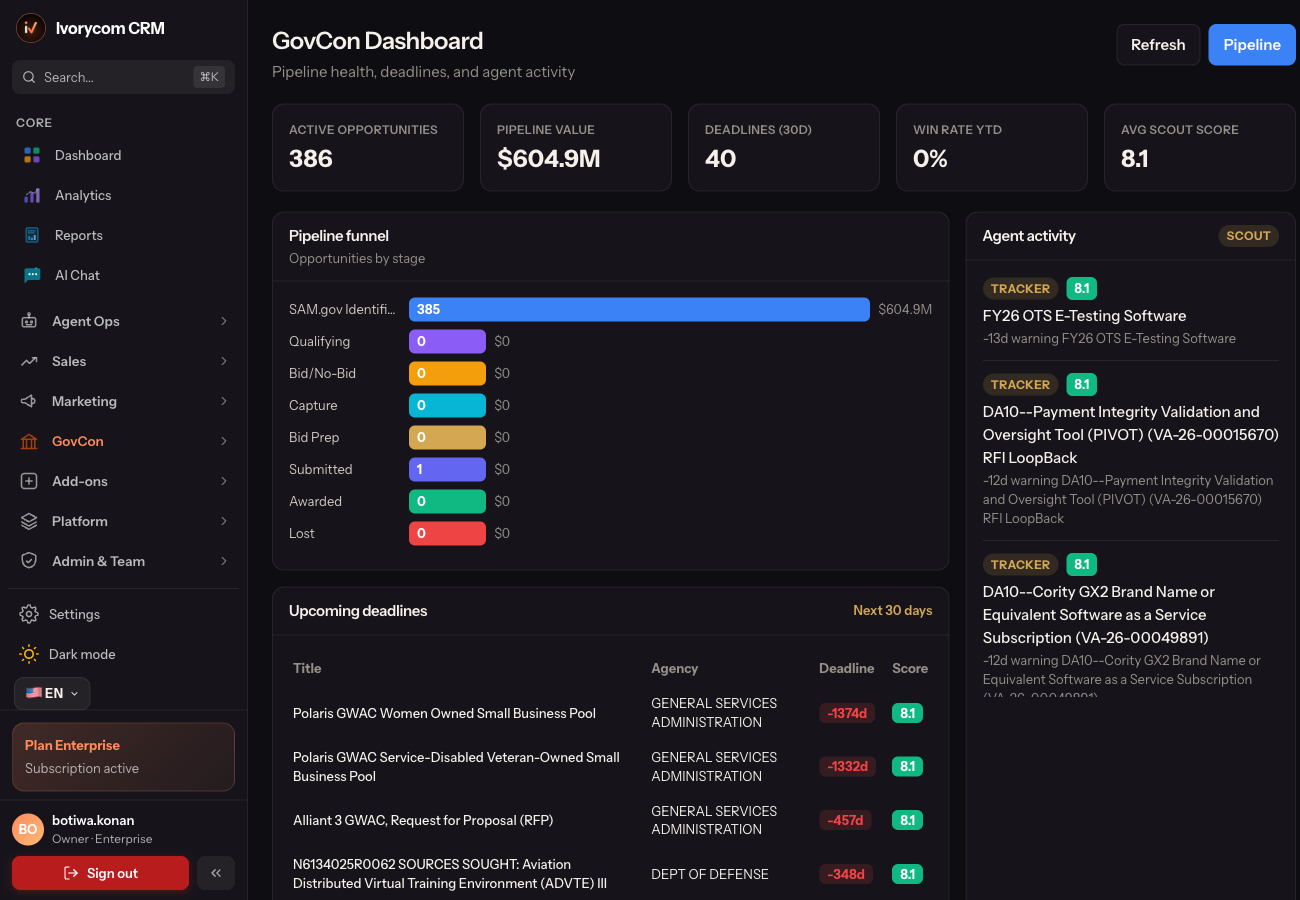
    What is a GovCon CRM?

    A commercial CRM assumes you find a buyer, qualify them and negotiate. Federal contracting inverts almost every part of that: the requirement is published, the process is defined in regulation, and the decisive work happens months before anything is competed.

    8 min read

What we write about

Three threads, chosen because they are where teams most often buy the wrong thing: the difference between a CRM that stores and one that interprets, the difference between measuring traffic and reading intent, and the operational question of how much execution you are willing to delegate to software.

  • Comparisons that name what is actually different, not just which product wins.
  • The operational consequence — what changes in the daily work, not only in the feature list.
  • Explicit limits: where a signal stops being reliable and judgment has to take over.

Start from a topic instead

AI CRMWhat makes a CRM an AI CRM, and where the AI is allowed to actBuyer intentFirst-party and third-party signals, and how to score themVisitor intentReading website behavior as revenue signal, privatelyRevenue operationsThe four handoffs where revenue actually leaks

See it on your own records.

The comparisons in these pieces are easiest to judge against data you already have opinions about.